Prominent academics, policy makers and political stakeholders have called for urgent reforms to Nigeria’s political party primary election process, warning that the country’s democratic future will remain at risk unless transparency, accountability, internal party democracy and the rule of law are strengthened.
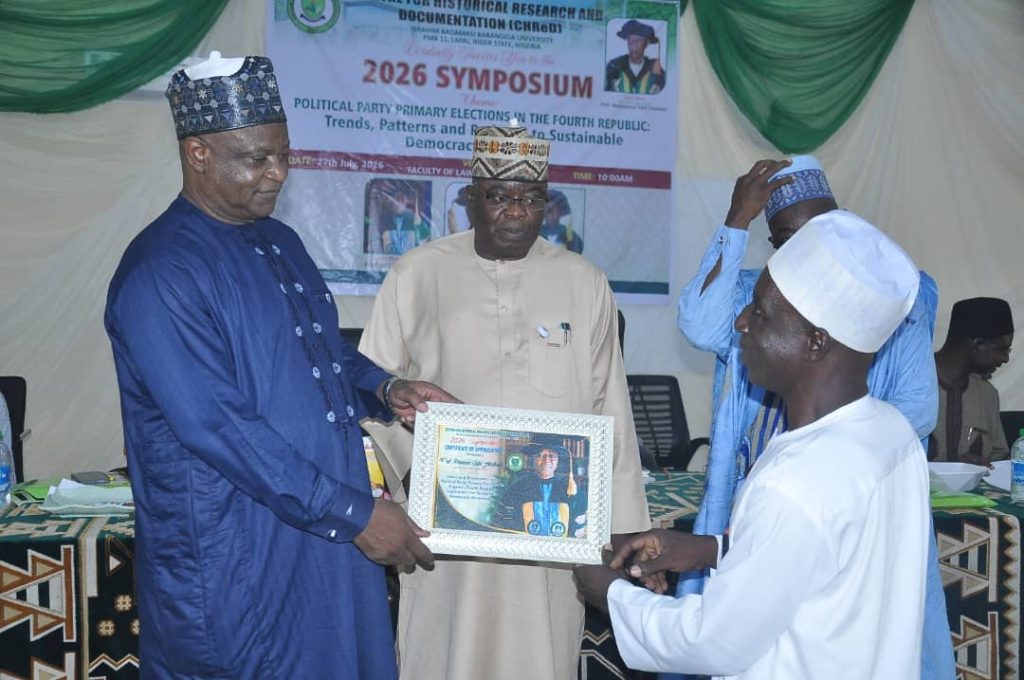
The call was made at the 7th Annual Symposium of the Centre for Historical Research and Documentation, Ibrahim Badamasi Babangida University (IBBU), Lapai, where participants identified candidate imposition, godfatherism, monetisation of politics and weak internal party democracy as major obstacles to credible elections and sustainable democratic governance.
In his address, the Vice-Chancellor, Professor Mohammed Hadi Sulaiman, represented by the Deputy Vice-Chancellor (Academic), Professor Mohammed Aliyu Bello, described the theme, “Primary Elections and Their Dynamics in Nigeria,” as both timely and significant, noting that understanding the complexities of party primary elections is essential to strengthening Nigeria’s democratic process.
According to him, primary elections play a decisive role in shaping political leadership and governance, making scholarly engagement on the subject necessary as the nation prepares for another electoral cycle. He expressed confidence that the symposium would provide a valuable platform for participants to examine the historical, political and democratic implications of party primaries through insightful presentations by distinguished scholars and experts.
Professor Bello also commended the Centre for Historical Research and Documentation for its sustained commitment in organising intellectual engagements on contemporary national issues, describing its symposium series as an important contribution to academic discourse and public policy.
He reaffirmed the University’s commitment to promoting research, innovation and academic excellence through increased support for research projects, workshops and strategic collaborations with funding agencies such as TETFund, as well as local and international institutions.
The Vice-Chancellor expressed appreciation to the organising committee for their dedication and to the guest speakers for accepting to share their expertise, while urging participants to actively engage in the discussions, exchange ideas and contribute meaningfully to advancing democratic governance and national development through informed dialogue.
Earlier in his welcome address, the Director of the Centre for Historical Research and Documentation, Professor Sallawu Muhammad Lawal, said the theme of the symposium was carefully chosen because party primary elections not only shape the outcome of general elections but also determine the quality and character of political leadership, influence party cohesion, and provide an opportunity to assess Nigeria’s 26 years of uninterrupted democratic governance through seven election cycles.
He noted that the symposium, now in its seventh edition, has evolved into a respected intellectual platform since its inception, with previous editions addressing critical national issues such as federalism and restructuring, the 2019 general elections, the Nigerian Civil War, banditry and insecurity, the COVID-19 pandemic, and the impact of insurgency, terrorism and banditry on food security.
Professor Lawal explained that this year’s edition features two newly promoted professors presenting papers titled “Issues and Dimensions in the Political Party Primary Elections in Nigeria’s Fourth Republic: Implications for Sustainable Democratic Governance” by Professor Mammam Saba Abdulkadiri and “From Balance to Anointing: How the Erosion of Internal Democracy Threatens Nigeria’s Democratic Consolidation” by Professor Ahmed Mohammed Letswa.
He added that the symposium would continue with additional paper presentations, which would be published in honour of the late former Governor of Niger State and Founder of Ibrahim Badamasi Babangida University, Lapai, Engineer Abdulkadir A. Kure.
Presenting the Lead Paper titled, “Issues and Dimensions in Political Party Primary Elections in Nigeria’s Fourth Republic: Implications for Sustainable Democratic Governance,” Professor Mammam Saba Abdulkadir argued that the credibility of Nigeria’s democracy is largely determined during party primary elections rather than the general elections, describing primaries as the foundation upon which democratic governance is built. He identified major challenges undermining internal party democracy, including the imposition of candidates, godfatherism, monetisation of the electoral process, vote-buying, excessive nomination fees, weak party ideology, delegate manipulation and the growing influence of political elites in candidate selection, noting that these practices often deny competent candidates the opportunity to emerge.
He warned that flawed primary elections inevitably produce poor leadership and weaken democratic institutions.
To strengthen sustainable democratic governance, Professor Abdulkadir recommended stronger oversight of party primaries by the Independent National Electoral Commission (INEC), a drastic reduction in nomination fees to encourage greater participation by youths and women, digitalisation of political party membership registers to enhance transparency and credibility, strict enforcement of electoral laws with sanctions against violators, and comprehensive reforms aimed at restoring internal party democracy, accountability, merit and transparency in the candidate selection process.
The paper was discussed by the Deputy Vice Chancellor, Administration, Professor Salihu Mohammed Niworu
Presenting the second Lead Paper titled “From Ballot to Anointing: How the Erosion of Internal Democracy Threatens Nigeria’s Democratic Consolidation,” Professor Ahmed Mohammed Letswa argued that the persistent decline of internal democracy within political parties has become a major threat to Nigeria’s democratic development. Drawing lessons from Athenian and American democracies, he noted that elite domination, exclusion, godfatherism, monetisation of politics, candidate imposition and the capture of party structures by powerful political and economic interests have undermined credible party primaries and weakened democratic institutions.
He observed that these practices have resulted in poor leadership recruitment, voter apathy, declining public confidence in elections, factional crises within political parties and weak governance.
Professor Letswa stressed that democracy can only thrive where political parties uphold internal democracy, the rule of law, transparency and broad participation in candidate selection. He recommended comprehensive electoral and political party reforms, strict adherence to the rule of law, transparent and credible party primaries, greater participation of party members in decision-making, strengthened democratic institutions, accountability by political leaders, and full implementation of existing electoral laws to restore public confidence and consolidate democracy in Nigeria.
The paper was extensive discussed by professor Sheikh Abubakar Danjuma.
In his goodwill message, the Niger State Commissioner for Tertiary Education Hon Abdullahi Adamu Sheshi Katcha described the symposium as timely and intellectually enriching, expressing appreciation to the Vice-Chancellor, the Director of the Centre for Historical Research and Documentation, and the Management of Ibrahim Badamasi Babangida University, Lapai, for the invitation to participate in the academic discourse.
He noted that the theme, “Political Party Primary Elections in the Fourth Republic: Changing Patterns and Pathways to Sustainable Democracy in Nigeria,” is highly relevant to the country’s democratic development, stressing that credible party primaries are fundamental to producing responsible leadership and strengthening democratic institutions.
He emphasised that sustainable democracy can only thrive where transparency, accountability, merit, justice and the rule of law are upheld, while highlighting the vital role of universities in shaping national discourse through research, innovation and policy recommendations.
The Commissioner reaffirmed the commitment of the administration of Governor Umaru Mohammed Bago to promoting quality tertiary education, research, good governance and institutional excellence across the state, assuring continued support for initiatives that encourage intellectual engagement and evidence-based policymaking.
He expressed confidence that the symposium’s deliberations and recommendations would contribute to improving Nigeria’s electoral process and deepening democratic governance, while urging students to embrace knowledge, integrity, patriotism and responsible leadership as future nation-builders.
In his vote of thanks and closing remarks, the Deputy Director of the Centre for Historical Research and Documentation, Dr. Sheshi T. Sidi, expressed profound appreciation to the Vice-Chancellor, the Guest Speakers, participants, sponsors, members of the organising committee and all invited guests for contributing to the success of the symposium. He commended the insightful presentations and robust discussions, noting that the recommendations emerging from the event would enrich academic discourse and contribute to strengthening democratic governance in Nigeria.
Dr. Sidi also reaffirmed the Centre’s commitment to promoting research and intellectual engagement on contemporary national issues.