IBBUL DON CALLS FOR GREATER INVESTMENT IN SATELLITE TECHNOLOGY

A professor of Remote sensing in Ibrahim Badamasi Babangida University Lapai, Professor Solomon Ndace Jiya has called on governments at all levels to harness the power of remote sensing and satellite technology to tackle Nigeria’s security, environmental and developmental challenges.

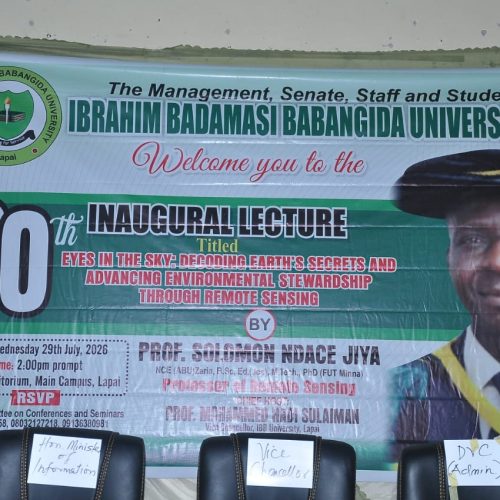
Delivering the 30th Inaugural Lecture, titled, “Eyes in the Sky: Decoding Earth’s Secrets and Advancing Environmental Stewardship through Remote Sensing,” the Professor of Remote Sensing described satellites as the “eyes in the sky” that continuously monitor the Earth’s surface, providing vital information on natural resources, land use, agriculture, climate change, security and infrastructure without direct physical contact.

He explained that advances in Earth observation, artificial intelligence and cloud computing have made it possible to detect hidden mineral deposits, monitor environmental degradation, forecast rainfall, map urban expansion, track oil spills, identify security threats and support evidence-based policymaking.

The inaugural lecturer stressed that remote sensing has become indispensable to modern governance and sustainable development, noting that Nigeria has made significant progress in space technology and remains one of Africa’s leading satellite-operating nations.

He observed that satellite imagery can support efforts to combat terrorism, kidnapping, illegal mining, deforestation, pollution and climate change while improving agricultural productivity, disaster management, water resource planning and urban development. Professor Jiya warned that unchecked population growth, indiscriminate tree felling, charcoal production and environmental degradation are accelerating climate change, urging citizens and governments to embrace responsible environmental stewardship.

Professor Jiya recommended that the National Space Research and Development Agency and the National Centre for Remote Sensing establish satellite monitoring stations for major development projects across the country to improve transparency and project implementation.

He further urged the Federal Government to increase funding for geospatial research, integrate satellite technology into education and agricultural planning, and deploy early warning systems to support farmers and disaster managers.

The Lecturer also advocated for stronger collaboration among governments, universities, the media, civil society organisations and international partners to expand the use of geospatial intelligence for conflict prevention, environmental protection and national development.

Concluding the lecture, the Professor cautioned that climate change is no longer a future threat but a present reality, emphasising that while satellites alone cannot solve humanity’s challenges, sustainable development and effective environmental management will be difficult to achieve without embracing remote sensing technology.

In his remarks, the Vice Chancellor, Professor Mohammed Hadi Sulaiman, represented by the Deputy Vice-Chancellor (Administration), Professor Salihu Mohammed Niworu, described the University’s inaugural lecture series as a vital academic tradition that enables professors to present the outcomes of their research and contribute to the advancement of knowledge.

He noted that the title of the 30th Inaugural Lecture was timely, given the growing challenges of climate change, environmental degradation, flooding, deforestation and rapid urbanisation, emphasizing that remote sensing technology has become an essential tool for supporting environmental management, disaster preparedness, food security and evidence-based policymaking.

In his welcome remarks, the Chairman of the Senate Committee on Conferences and Seminars, Professor Ebenezer Oluseun Ogungbe, welcomed guests, describing the occasion as a significant academic event that celebrates knowledge, excellence, perseverance and the outstanding achievements of distinguished scholars. He noted that the lecture, delivered by Professor Solomon Ndace Jiya marked another milestone in the University’s commitment to intellectual advancement.

Professor Ogungbe explained that inaugural lectures remain one of the most important academic traditions in the university system, providing professors with the unique opportunity to present the outcomes of their research, innovations, professional experiences and scholarly contributions to the academic community and the public.

He commended the Vice-Chancellor, Professor Mohammed Hadi Sulaiman, for revitalising the culture of regular inaugural lectures in the University, describing the initiative as a demonstration of the administration’s unwavering commitment to knowledge dissemination, research excellence and intellectual development.

In a vote of thanks and closing remarks, the representative of the University Registrar, the Deputy Registrar (Management and Council Affairs), Barrister Amina Yunusa Ndayako, expressed appreciation to the Inaugural Lecturer, Professor Solomon Ndace Jiya, for his insightful presentation and noted that the lecture highlighted the importance of satellite technology and remote sensing in governance, environmental management, agriculture and urban planning, while calling for greater collaboration among universities, governments, industries and communities to translate research into practical solutions for sustainable development.

She congratulated Professor Jiya on the successful delivery of his inaugural lecture, thanked all guests for attending.

SENATE APPROVES APPOINTMENT OF A NEW PROFESSOR

The Senate of Ibrahim Badamasi Babangida University Lapai, has approved the promotion of a Senior Academic to the rank of Professor as part of its continued efforts to strengthen academic excellence and reward outstanding scholarship.

The approval was granted during the University’s 109th Regular Senate Meeting held on Thursday, July 30, 2026, following the successful consideration of recommendations from the Appointment and Promotion Committee.

The newly promoted Academic is Professor Ahmad Abdul-Gafar of the Department of Agricultural Economics and Extension, Faculty of Agriculture, whose elevation reflects years of distinguished service, academic productivity, and commitment to advancing knowledge in his field.

The recommendations for the promotion had earlier been ratified by the University Council based on rigorous assessments of the candidate’s teaching effectiveness, research output, scholarly publications, community service, and other professional contributions.

Presenting the memo to the Senate, the Vice-Chancellor, Professor Mohammed Hadi Sulaiman, disclosed that the promotion followed favourable reports from independent external assessors who confirmed that the candidate met all the University’s stringent criteria for elevation to the professorial cadre. The promotion takes effect from October, 2025.

Congratulating the new Professor, the Vice-Chancellor described the elevation as a well-deserved recognition of dedication, perseverance, and scholarly excellence and urged the beneficiary to continue contributing to research, mentoring younger academics, and providing intellectual leadership that will further enhance the University’s reputation.

Professor Mohammed Hadi Sulaiman also reaffirmed the University’s commitment to a transparent and merit-based promotion system, expressing confidence that the latest elevation would inspire greater academic productivity and reinforce the University’s standing as a leading institution of higher learning.

SYMPOSIUM ON PARTY PRIMARIES AND DEMOCRATIC GOVERNANCE TAKES CENTRE STAGE IN IBBUL

Prominent academics, policy makers and political stakeholders have called for urgent reforms to Nigeria’s political party primary election process, warning that the country’s democratic future will remain at risk unless transparency, accountability, internal party democracy and the rule of law are strengthened.

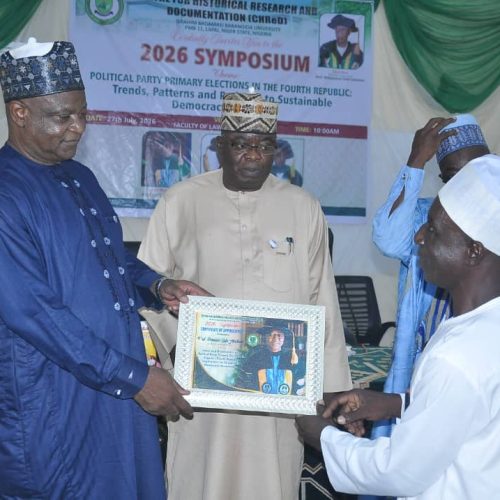
The call was made at the 7th Annual Symposium of the Centre for Historical Research and Documentation, Ibrahim Badamasi Babangida University (IBBU), Lapai, where participants identified candidate imposition, godfatherism, monetisation of politics and weak internal party democracy as major obstacles to credible elections and sustainable democratic governance.

In his address, the Vice-Chancellor, Professor Mohammed Hadi Sulaiman, represented by the Deputy Vice-Chancellor (Academic), Professor Mohammed Aliyu Bello, described the theme, “Primary Elections and Their Dynamics in Nigeria,” as both timely and significant, noting that understanding the complexities of party primary elections is essential to strengthening Nigeria’s democratic process.

According to him, primary elections play a decisive role in shaping political leadership and governance, making scholarly engagement on the subject necessary as the nation prepares for another electoral cycle. He expressed confidence that the symposium would provide a valuable platform for participants to examine the historical, political and democratic implications of party primaries through insightful presentations by distinguished scholars and experts.

Professor Bello also commended the Centre for Historical Research and Documentation for its sustained commitment in organising intellectual engagements on contemporary national issues, describing its symposium series as an important contribution to academic discourse and public policy.

He reaffirmed the University’s commitment to promoting research, innovation and academic excellence through increased support for research projects, workshops and strategic collaborations with funding agencies such as TETFund, as well as local and international institutions.

The Vice-Chancellor expressed appreciation to the organising committee for their dedication and to the guest speakers for accepting to share their expertise, while urging participants to actively engage in the discussions, exchange ideas and contribute meaningfully to advancing democratic governance and national development through informed dialogue.

Earlier in his welcome address, the Director of the Centre for Historical Research and Documentation, Professor Sallawu Muhammad Lawal, said the theme of the symposium was carefully chosen because party primary elections not only shape the outcome of general elections but also determine the quality and character of political leadership, influence party cohesion, and provide an opportunity to assess Nigeria’s 26 years of uninterrupted democratic governance through seven election cycles.

He noted that the symposium, now in its seventh edition, has evolved into a respected intellectual platform since its inception, with previous editions addressing critical national issues such as federalism and restructuring, the 2019 general elections, the Nigerian Civil War, banditry and insecurity, the COVID-19 pandemic, and the impact of insurgency, terrorism and banditry on food security.

Professor Lawal explained that this year’s edition features two newly promoted professors presenting papers titled “Issues and Dimensions in the Political Party Primary Elections in Nigeria’s Fourth Republic: Implications for Sustainable Democratic Governance” by Professor Mammam Saba Abdulkadiri and “From Balance to Anointing: How the Erosion of Internal Democracy Threatens Nigeria’s Democratic Consolidation” by Professor Ahmed Mohammed Letswa.

He added that the symposium would continue with additional paper presentations, which would be published in honour of the late former Governor of Niger State and Founder of Ibrahim Badamasi Babangida University, Lapai, Engineer Abdulkadir A. Kure.

Presenting the Lead Paper titled, “Issues and Dimensions in Political Party Primary Elections in Nigeria’s Fourth Republic: Implications for Sustainable Democratic Governance,” Professor Mammam Saba Abdulkadir argued that the credibility of Nigeria’s democracy is largely determined during party primary elections rather than the general elections, describing primaries as the foundation upon which democratic governance is built. He identified major challenges undermining internal party democracy, including the imposition of candidates, godfatherism, monetisation of the electoral process, vote-buying, excessive nomination fees, weak party ideology, delegate manipulation and the growing influence of political elites in candidate selection, noting that these practices often deny competent candidates the opportunity to emerge.

He warned that flawed primary elections inevitably produce poor leadership and weaken democratic institutions.

To strengthen sustainable democratic governance, Professor Abdulkadir recommended stronger oversight of party primaries by the Independent National Electoral Commission (INEC), a drastic reduction in nomination fees to encourage greater participation by youths and women, digitalisation of political party membership registers to enhance transparency and credibility, strict enforcement of electoral laws with sanctions against violators, and comprehensive reforms aimed at restoring internal party democracy, accountability, merit and transparency in the candidate selection process.

The paper was discussed by the Deputy Vice Chancellor, Administration, Professor Salihu Mohammed Niworu

Presenting the second Lead Paper titled “From Ballot to Anointing: How the Erosion of Internal Democracy Threatens Nigeria’s Democratic Consolidation,” Professor Ahmed Mohammed Letswa argued that the persistent decline of internal democracy within political parties has become a major threat to Nigeria’s democratic development. Drawing lessons from Athenian and American democracies, he noted that elite domination, exclusion, godfatherism, monetisation of politics, candidate imposition and the capture of party structures by powerful political and economic interests have undermined credible party primaries and weakened democratic institutions.

He observed that these practices have resulted in poor leadership recruitment, voter apathy, declining public confidence in elections, factional crises within political parties and weak governance.

Professor Letswa stressed that democracy can only thrive where political parties uphold internal democracy, the rule of law, transparency and broad participation in candidate selection. He recommended comprehensive electoral and political party reforms, strict adherence to the rule of law, transparent and credible party primaries, greater participation of party members in decision-making, strengthened democratic institutions, accountability by political leaders, and full implementation of existing electoral laws to restore public confidence and consolidate democracy in Nigeria.

The paper was extensive discussed by professor Sheikh Abubakar Danjuma.

In his goodwill message, the Niger State Commissioner for Tertiary Education Hon Abdullahi Adamu Sheshi Katcha described the symposium as timely and intellectually enriching, expressing appreciation to the Vice-Chancellor, the Director of the Centre for Historical Research and Documentation, and the Management of Ibrahim Badamasi Babangida University, Lapai, for the invitation to participate in the academic discourse.

He noted that the theme, “Political Party Primary Elections in the Fourth Republic: Changing Patterns and Pathways to Sustainable Democracy in Nigeria,” is highly relevant to the country’s democratic development, stressing that credible party primaries are fundamental to producing responsible leadership and strengthening democratic institutions.

He emphasised that sustainable democracy can only thrive where transparency, accountability, merit, justice and the rule of law are upheld, while highlighting the vital role of universities in shaping national discourse through research, innovation and policy recommendations.

The Commissioner reaffirmed the commitment of the administration of Governor Umaru Mohammed Bago to promoting quality tertiary education, research, good governance and institutional excellence across the state, assuring continued support for initiatives that encourage intellectual engagement and evidence-based policymaking.

He expressed confidence that the symposium’s deliberations and recommendations would contribute to improving Nigeria’s electoral process and deepening democratic governance, while urging students to embrace knowledge, integrity, patriotism and responsible leadership as future nation-builders.

In his vote of thanks and closing remarks, the Deputy Director of the Centre for Historical Research and Documentation, Dr. Sheshi T. Sidi, expressed profound appreciation to the Vice-Chancellor, the Guest Speakers, participants, sponsors, members of the organising committee and all invited guests for contributing to the success of the symposium. He commended the insightful presentations and robust discussions, noting that the recommendations emerging from the event would enrich academic discourse and contribute to strengthening democratic governance in Nigeria.

Dr. Sidi also reaffirmed the Centre’s commitment to promoting research and intellectual engagement on contemporary national issues.

GOVERNOR BAGO REAFFIRMS COMMITMENT TO COMPLETING IBBU TEACHING HOSPITAL, SAYS PIONEER MBBS STUDENTS WILL BE THE LAST TO TRANSFER OUT

The Visitor to Ibrahim Badamasi Babangida University, Lapai, and Governor of Niger State, Farmer Umar Mohammed Bago, has reaffirmed his administration’s commitment to the completion of the Ibrahim Badamasi Babangida University Teaching Hospital (IBBUTH), assuring that the project will be delivered without further delay.

He emphasized that the completion of the teaching hospital remains a top priority of his government as part of its broader commitment to strengthening medical education and healthcare delivery in Niger State.

Governor Bago congratulated the University’s 41 pioneer MBBS students on the commencement of their clinical training at Ahmadu Bello University (ABU), Zaria, describing them as trailblazers whose resilience and perseverance had laid a solid foundation for future generations of medical students. While acknowledging that their relocation was a necessary step to enable them complete their clinical education. He expressed optimism that they would be the first and the last set of IBBU medical students to undertake such a transfer, and assured that all necessary mechanisms had already been put in place to ensure the timely completion and full operationalization of the University’s Teaching Hospital, enabling subsequent medical students to complete their entire training at IBBU, Lapai.

He urged them to approach the next phase of their training with confidence, dedication, and a strong sense of responsibility, assuring them of the Niger State Government’s support throughout their clinical programme. He disclosed that construction and equipping of the University’s Teaching Hospital would be completed within the next year, making it possible for future cohorts of medical students to receive both pre-clinical and clinical training entirely within Ibrahim Badamasi Babangida University.

To support the pioneer students during their stay in Zaria, the Governor announced the donation of a brand-new 18-seater bus to facilitate transportation between their accommodation and lecture venues, adding that the vehicle would be specially branded for the IBBU College of Medical Sciences.

In another landmark intervention aimed at supporting the pioneer MBBS programme, Governor Bago announced a financial assistance package of ₦100 million. He directed that each of the 41 pioneer medical students should receive ₦2 million directly into their personal bank accounts, amounting to ₦82 million, with instructions that the payments be effected immediately. He further approved ₦8 million for the College of Medical Sciences and ₦10 million for Ibrahim Badamasi Babangida University to strengthen the programme, improve logistics, and ensure the seamless continuation of the students’ clinical education.

The Visitor charged the students to be worthy ambassadors of Niger State and Ibrahim Badamasi Babangida University by demonstrating excellence, discipline, and professionalism throughout their training. He assured them that his administration would continue to monitor their academic progress and welfare, encouraging them to channel any concerns through the Commissioner for Secondary and Tertiary Health, the Medical Director, or directly to his office whenever necessary.

The State Commissioner for Secondary and Tertiary Health, Hon. Dr. Ibrahim Ahmed Bagana, formally presented the pioneer MBBS students of Ibrahim Badamasi Babangida University, Lapai, to the Governor, and informed him that the delegation comprised 41 pioneer medical students embarking on their clinical training at Ahmadu Bello University (ABU), Zaria, describing them as “your children” who had come to express their profound gratitude to the Governor, the Ministry of Secondary and Tertiary Health, and the Ministry of Tertiary Education for the support and commitment shown towards sustaining the University’s medical programme despite the initial accreditation challenges.

Speaking on behalf of the students, the pioneer President of the IBBU Medical Students’ Association, Comrade Jamilu Minkail, expressed heartfelt appreciation to Governor Umar Mohammed Bago for his visionary leadership and commitment to medical education in Niger State. He said that although the pioneer students experienced setbacks during the accreditation process, the Governor never abandoned them but instead worked tirelessly to secure an alternative arrangement at Ahmadu Bello University, Zaria, ensuring that their dream of becoming medical doctors remained alive.

He commended the Governor for providing excellent accommodation and a conducive learning environment for the students, describing the intervention as unprecedented and a demonstration of genuine fatherly concern for their welfare and future.

Comrade Jamilu also paid glowing tribute to the management of Ibrahim Badamasi Babangida University, particularly the Vice-Chancellor, Professor Mohammed Hadi Sulaiman, for maintaining an open-door policy and consistently standing by the students throughout the challenges they encountered. He equally praised the Provost of the College of Health Sciences and the academic staff for their dedication, commitment and quality teaching, noting that the lecturers spared no effort in ensuring that the pioneer students received the best possible academic foundation, assuaring the Governor that the 41 pioneer students would remain worthy ambassadors of IBBU and Niger State, with a promise to uphold the values of excellence, discipline and professionalism wherever they found themselves.

He further shared the inspiring story of how the Governor’s approval of the MBBS programme revived his’ aspirations, and dream of studying Medicine and Surgery had almost been lost after an unsuccessful attempt to secure a foreign scholarship, adding that the Governor’s intervention restored hope to many aspiring medical doctors and prayed that Almighty Allah would preserve him to witness the lasting impact of the legacy he has created for future generations of Niger State.

IBBU ASSURES LAPAI EDUCATION AUTHORITY OF STRONGER PARTNERSHIP TO IMPROVE BASIC EDUCATION

The Vice-Chancellor of Ibrahim Badamasi Babangida University, Lapai, Professor Mohammed Hadi Sulaiman, has assured of the University’s commitment to partnering with the Lapai Local Education Authority (LEA) to strengthen basic education through capacity building, teacher development, ICT training, and other strategic interventions.

The assurance was given when the Education Secretary of the Lapai Local Education Authority, Malam Umar Yanda Galadima, led his Management team on a courtesy visit to the Vice-Chancellor at his office.

Professor Mohammed Hadi Sulaiman acknowledged the challenges confronting basic education in the area, particularly the shortage of qualified teachers, inadequate staff development opportunities, and the need for improved ICT capacity among teachers and administrators.

He noted that the University would carefully examine the requests presented by the Education Authority and identify practical areas where it could provide support in line with its available resources and mandate.

The Vice-Chancellor explained that while the University is not a government agency, it remains committed to fulfilling its statutory responsibility of teaching, research, and community service.

He assured the delegation that the University’s Management would deliberate on the proposals and formally communicate areas of intervention, including ICT capacity-building programmes, professional development for teachers, and the deployment of students from the Faculty of Education for teaching practice to help bridge the manpower gap in schools across the Local Government Area.

Professor Suleiman further highlighted the University’s ongoing Summer Science Coaching Programme designed to improve students’ performance in WAEC and NECO examinations, adding that the second phase of the programme would commence in August.

According to him, the initiative demonstrates the University’s determination to contribute meaningfully to educational development from the secondary school level while extending similar interventions to basic education.

Earlier, the Education Secretary of the Lapai Local Education Authority, Malam Umar Yanda Galadima, expressed appreciation to the University for its longstanding support to education within the Local Government Area.

He said the visit was not only to convey the Authority’s gratitude but also to seek a broader partnership that would improve the quality of teaching and learning in primary and junior secondary schools. He observed that the presence of a reputable Institution such as IBB University in Lapai presents an invaluable opportunity for the Local Education Authority to benefit from the University’s academic expertise and professional experience.

Malam Galadima identified inadequate staffing, limited opportunities for teacher capacity development, and insufficient ICT knowledge among teachers and management staff as some of the major challenges facing basic education in the area.

He appealed to the University to support the continuous training of teachers, especially in digital literacy and modern teaching methods, while also requesting that education students on teaching practice be posted to schools under the Local Education Authority.

He further invited the Vice-Chancellor to visit the newly established science-oriented basic school in Lapai, describing it as a strategic investment aimed at nurturing future scientists and technology-driven learners.

In their remarks, other members of the University Management, commended the initiative, describing the visit as a significant step towards deepening collaboration between the University and its host community.

They emphasized that community engagement remains one of the core mandates of the University and assured the delegation that the management would continue to support initiatives capable of improving educational standards in Lapai and beyond.

The Management team further noted that the University’s Staff School serves as a model institution for quality basic education and expressed readiness to share its experiences through staff exchange programmes, curriculum support, teacher mentoring, and capacity-building workshops.

They reaffirmed the University’s resolve to work closely with the Local Education Authority in developing competent teachers, stressing that quality manpower remains the foundation of every successful educational system and the key to producing academically outstanding pupils and students.

IBBUL VICE CHANCELLOR CALLS FOR RENEWED INVESTMENT IN LIBRARY AND INFORMATION SCIENCE

The Vice Chancellor, Ibrahim Badamasi Babangida University, Lapai, Professor Mohammed Hadi Sulaiman has called for renewed investment in libraries and information services as critical drivers of education, research, innovation, and national development.

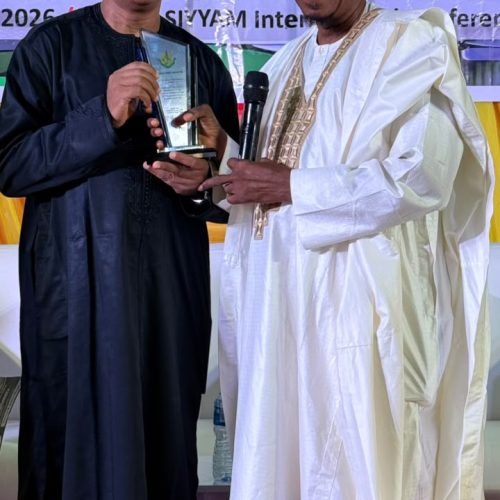
Speaking as Chairman of the Occasion at the 64th National Conference and Annual General Meeting of the Nigerian Library Association (NLA) held at the Siyyam International Conference Centre, Minna, Professor Sulaiman described the conference theme, “Our Future, Our Hope: The State of Libraries and Librarianship in Nigeria,” as timely and relevant to the nation’s development aspirations.

He noted that libraries remain the heartbeat of every educational system and indispensable centres for knowledge preservation, learning, research, innovation, and lifelong education. While acknowledging the significant contributions of academic and public libraries in promoting scholarship, informed decision-making, and community development,

The Vice Chancellor stressed that libraries must remain at the forefront of national planning and investment if Nigeria is to build a knowledge-driven economy capable of competing globally.

Professor Sulaiman also identified inadequate funding, obsolete infrastructure, limited access to current information resources and electronic databases, poor broadband connectivity, erratic power supply, and shortages of qualified personnel as major challenges confronting libraries across the country.

Despite these obstacles, he expressed optimism that the sector could be transformed through stronger government support, strategic partnerships, continuous professional development, research, innovation, digital transformation, and the adoption of emerging technologies, including artificial intelligence and digital repositories. He urged participants to use the conference as a platform to exchange ideas, develop practical solutions, and produce implementable recommendations that would strengthen library and information services across Nigeria.

Declaring the Conference open, the Honourable Commissioner for Information , Honourable Obed Nuhu Nana, who stood in for Farmer Governor Mohammed Umar Bago, reaffirmed the State Government’s commitment to building a knowledge-driven economy through sustained investment in libraries, education, digital technology, research, and innovation.

He described libraries as indispensable institutions for preserving knowledge, promoting education, supporting research, and providing equitable access to credible information and noted that in an era of rapid technological advancement and digital transformation, librarians have become strategic partners in governance, policy formulation, innovation, and national development, stressing that his administration remains committed to strengthening digital infrastructure.

The Commissioner further emphasised that libraries have evolved beyond repositories of books to become centres of digital literacy, innovation, entrepreneurship, and lifelong learning, urging librarians to embrace emerging technologies and position themselves as trusted custodians of credible information in the fight against misinformation and fake news.

Honourable Nana further reaffirmed the State’s support for initiatives aimed at integrating digital libraries into schools and tertiary institutions while promoting partnerships among government, educational institutions, and development partners to strengthen library and information services.

He also highlighted the importance of libraries in preserving government records, supporting academic research, and driving the State’s agricultural and digital economy agenda through effective information management. He commended the Nigerian Library Association for promoting professional excellence and encouraged participants to use the conference to develop practical solutions that would reposition libraries as catalysts for education, innovation, and sustainable national development.

In their separate welcome addresses, the National President of the Nigerian Library Association (NLA), Dr. Lawal Umar, and the Chairman of the NLA, Niger State Chapter, Dr. Musa Baba Adamu, welcomed delegates from across the country to the 64th National Conference and Annual General Meeting, describing the gathering as a significant platform for advancing librarianship and promoting knowledge-driven national development.

They noted that the conference theme, “Our Future, Our Hope,” reflects the critical role of libraries and information professionals in addressing the challenges of technological advancement, digital transformation, and the evolving information landscape. The duo reaffirmed the Association’s commitment to strengthening professional development through continuous training, digital innovation, strategic partnerships, and collaboration with government and relevant stakeholders to reposition libraries as centres of learning, research, innovation, and equitable access to information.

In his keynote address Professor Ezra Shiloba Gbaje of the Department of Library and Information Science, Federal University Lokoja, has called on Nigerian librarians to embrace emerging technologies and reposition libraries as innovation hubs capable of meeting the demands of the digital age.

Delivering the keynote address at the 64th National Conference and Annual General Meeting of the Nigerian Library Association (NLA) in Minna, Professor Gbaje said the rapid emergence of artificial intelligence (AI), machine learning, cloud computing, big data, virtual and augmented reality, radio-frequency identification (RFID), and digital preservation technologies is fundamentally transforming how information is created, managed, accessed, and consumed.

He stressed that librarians must move beyond their traditional role as custodians of books to becoming digital information specialists equipped with AI literacy and the capacity to train students, researchers, academics, and the wider public in the responsible use of emerging technologies.

The Keynote Speaker, however, expressed concern over the poor state of many libraries in Nigeria, attributing the situation to inadequate funding, obsolete infrastructure, poor internet connectivity, erratic power supply, limited access to electronic databases, and insufficient investment in digital technologies.

He observed that while academic libraries have made notable progress due to regulatory requirements, many public and school libraries remain underdeveloped, with some lacking functional library spaces and qualified personnel.

Professor Gbaje urged governments, educational institutions, library managers, and professional associations to prioritise investment in digital infrastructure, continuous staff training, curriculum review, and technology-driven library services.

In their separate goodwill messages, the Registrar and Chief Executive of the National Examinations Council (NECO), Professor Danlami Ibrahim Wushishi, and the Vice President of the Nigerian Library Association (NLA), Dr. Juliet C. Alex-Nmecha, commended the Association for sustaining a platform that promotes professional excellence, knowledge sharing, and innovation in library and information services.

They described libraries as indispensable institutions for quality education, research, and national development.

IBB UNIVERSITY, ABDULSALAMI ABUBAKAR INSTITUTE DEEPEN PARTNERSHIP ON PEACE, SECURITY AND SUSTAINABLE DEVELOPMENT

The Management of Ibrahim Badamasi Babangida University, Lapai, has reiterated the Institution’s resolve to expand its national and international partnerships towards advancing quality education, research and innovation.

The Vice Chancellor, Professor Mohammed Hadi Sulaiman stated this while receiving a delegation from the Abdulsalami Abubakar Institute for Peace and Sustainable Development Studies, Minna, led by its Director, Dr. Diamond Preye-Nebechukwu, on a courtesy visit to strengthen an existing Memorandum of Understanding (MoU) between the two Institutions.

Professor Mohammed Hadi Sulaiman said the University’s vision is to position IBB University among globally recognised Centres of excellence through strategic collaborations with reputable institutions across Nigeria and beyond.

He noted that the University already maintains productive partnerships with institutions in China, India and other countries, stressing that it remains open to new collaborations capable of advancing education, research and national development.

The Vice-Chancellor described former Head of State, General Abdulsalami Abubakar (rtd), as one of the University’s greatest benefactors, acknowledging his immense contributions to the growth and development of IBB University.

He recalled that the elder statesman who serves as Chairman of the University’s Endowment Fund, played a pivotal role in the completion of the new Senate Building and has continued to support the Institution in various capacities.

Professor Sulaiman welcomed the proposed collaboration in the areas of postgraduate training, research, peace, security and development studies, noting that the existing Memorandum of Understanding should be reviewed and strengthened by technical committees from both Institutions.

He assured the delegation that IBB University possesses the academic expertise and human resources required to support the proposed programmes, particularly in Sociology and related disciplines, while emphasising the University’s commitment to digital learning, innovation and technology-driven academic engagements.

Earlier, the Director of the Abdulsalami Abubakar Institute for Peace and Sustainable Development Studies, Dr. Diamond Preye-Nebechukwu, said the visit was aimed at consolidating the existing relationship between the Institute and IBB University.

She explained that the Institute, with the full support of its Founder, General Abdulsalami Abubakar, is committed to collaborating with institutions that will deepen peacebuilding, conflict resolution, research and capacity development across Nigeria.

Dr. Preye-Nebechukwu disclosed that the proposed partnership includes the establishment of a Postgraduate Diploma in Peace, Security and Development Studies, joint research projects, conferences, workshops and other academic programmes.

She noted that a draft curriculum had already been developed and expressed confidence that both Institutions would work together to refine the programme for mutual benefit, describing the collaboration as the beginning was of a long-term and impactful relationship.

In their separate remarks, other members of the Management warmly welcomed the delegation and expressed the University Management’s unwavering support for the proposed partnership.

They described Dr. Diamond Preye-Nebechukwu as a respected academic with whom many members of the University had previously worked, expressing confidence that the collaboration would yield significant academic and societal benefits.

The Management team further emphasised that collaboration remains one of the cardinal objectives of the present administration, noting that universities cannot thrive in isolation.

They expressed optimism that the partnership would enhance research, teaching, peacebuilding and sustainable development while strengthening the long-standing relationship between IBB University and General Abdulsalami Abubakar.

PIONEER MBBS STUDENTS BID FAREWELL TO IBBUL FOR MEDICAL TRAINING AT ABU, ZARIA

The pioneer set of 41 MBBS 300-level students who will relocate to Ahmadu Bello University Zaria, to continue their medical education have bid farewell to Ibrahim Badamasi Babangida University, Lapai.

Addressing the students at Abdulkadir Kure Senate Building, the Vice-Chancellor, Professor Mohammed Hadi Sulaiman, described the relocation as a strategic intervention designed to ensure that their academic progress remains uninterrupted while the University completes the establishment of its teaching hospital.

He explained that the achievement was the product of collective efforts involving the Visitor to the University and Governor of Niger State, Farmer Governor Umar Mohammed Bago, the Federal Ministry of Education, the Medical and Dental Council of Nigeria (MDCN), and several other stakeholders.

“The Vice-Chancellor was only an errand boy,” he remarked, insisting that the credit belonged to everyone who worked tirelessly to make the arrangement a reality.

Professor Hadi particularly commended the Visitor for his unwavering support and disclosed that construction of the University’s temporary teaching hospital is progressing rapidly, with a target of commencing operations by September 2026 to ensure that future medical students complete their clinical training within IBB University.

He noted that after extensive consultations, the Management of Ahmadu Bello University, Zaria graciously agreed to admit the 41 pioneer students into its College of Medical Sciences, where they will undertake intensive tutorials before sitting for their professional examinations in September.

He praised the leadership of ABU, particularly the Vice-Chancellor, Professor Adamu Ahmed, the Provost of the College of Medicine, Professor Dahiru, and other officials whose cooperation made the transition possible.

According to him, feedback from lecturers who have taught the students has consistently described them as one of the best classes, a reputation he challenged them to uphold. “You have zero margin for failure. Nobody should fail. You must justify the sacrifices made by your parents, the Governor, the Minister of Education and everyone who worked tirelessly to make this opportunity possible. We expect nothing less than excellence from all 41 of you,” he declared, urging them to strive for distinctions rather than settling for average grades.

The Vice-Chancellor further encouraged the students to remain focused, disciplined and committed to excellence, stressing that they now carry the image and reputation of IBB University wherever they go. He reminded them that they had earned the confidence of their lecturers through outstanding academic performance and good conduct and should therefore sustain that standard at ABU.

Professor Hadi urged them to reward the enormous sacrifices made by the University, government, their parents and other partners with exceptional results, adding that they should never forget the institution that nurtured them.

“You are ambassadors of IBB University. Wherever you go, let your conduct, character and performance reflect the excellence for which this university stands,” he said.

He also appealed to the students to return after graduation to contribute to the growth of the College of Medical and Health Sciences as lecturers, researchers and medical specialists, expressing optimism that the college would one day be managed by its own alumni.

Speaking on welfare arrangements, Professor Hadi assured the students that the University had put in place comprehensive logistics to guarantee a conducive learning environment throughout their stay in Zaria, disclosing that the students would be accommodated in a secure international-standard facility previously reserved for foreign students, complete with uninterrupted electricity and water supply, while the University would provide dedicated transportation to and fro tutorial venues and bear the costs of accommodation, transportation and tutorial sessions.

According to him, parents would only be responsible for providing feeding allowances, as cooking would not be permitted in the accommodation because of international safety regulations. “Your accommodation is secured, your transportation is secured and your tutorials are secured. Therefore, you have no excuse not to succeed. Reward our efforts with excellent results,” he told the students.

Professor Hadi also disclosed that the University had formally written to parents to seek their consent for the relocation, emphasizing that any parent with reservations should notify the Institution promptly. He reaffirmed the University’s commitment to completing the teaching hospital project and strengthening its medical programme so that subsequent cohorts would undertake their clinical training within IBB University.

While expressing confidence that the students would excel during their stay at ABU, the Vice-Chancellor challenged those coming behind to emulate the academic excellence of the pioneer class, reminding them that the medical profession demands competence, discipline and dedication because it deals directly with human lives.

Professor Mohammed Hadi Sulaiman, disclosed that IBB University is at the final stage of signing a Memorandum of Understanding (MoU) with Al-Mansurah University, Egypt, as part of efforts to internationalise the College of Health Sciences and broaden students’ academic exposure. He revealed that the university management and the Provost would soon meet in Abuja to conclude discussions on the partnership, which is expected to facilitate staff and student exchange programmes, research collaboration, and the sharing of academic expertise.

According to him, discussions are currently focused on the funding responsibilities of both institutions to ensure the successful implementation of the initiative. He assured the 200 level students who would remain at IBB University that they had not been left behind, promising that the Management would continue to pursue strategic partnerships and collaborations that would position the College of Health Sciences among the best nationally and internationally.

The Vice- Chanc
ellor added that the proposed collaboration came after international partners deliberately chose IBB University for the programme, expressing optimism that the partnership would provide students and staff with valuable global exposure while also welcoming scholars from Egypt to Lapai in the future.

In his opening remarks, the Provost of the College of Medical and Health Sciences, Professor Abubakar Aliyu, Noted that the interactive session was convened to further sensitise the 200 and 300-level MBBS students on the unique academic structure, regulations and expectations governing medical education. According to him, although the College of Medical and Health Sciences operates within the University system, it follows a more rigorous academic calendar and demands a higher level of commitment, discipline and academic excellence from its students. He stressed that regular attendance of lectures, practical sessions and continuous assessments remains critical to students’ success, noting that poor performance in continuous assessment often makes it difficult for students to excel in their final examinations.

Professor Aliyu said the meeting was intended to reinforce the college’s continuous orientation efforts and to enable the University Management to further impress upon the students the seriousness required to maintain the high academic standards for which IBB University is known.

Professor Aliyu further explained that the meeting also served to formally brief the pioneer 300-level MBBS students on their relocation to Ahmadu Bello University, Zaria, for their clinical training following delays in the completion of the University’s teaching hospital. He expressed profound appreciation to the Vice-Chancellor, Professor Mohammed Hadi Sulaiman, for deploying his experience, leadership and strategic engagements to secure admission slots for the students at ABU, thereby ensuring that their academic programme would not be disrupted. The Provost described the pioneer class as one of the college’s finest, noting that they had earned commendation from their lecturers for their academic performance and exemplary conduct. He expressed confidence that the students would serve as worthy ambassadors of IBB University in Zaria and stated that the interactive session was also designed to enable them receive the University Management’s goodwill and guidance before departure, while providing an opportunity for them to seek clarification on issues relating to the transition.

In their separate remarks, the Deputy Vice-Chancellor (Administration), Professor Salihu Mohammed Niworu, the Deputy Vice-Chancellor (Academics), Professor Mohammed Aliyu Bello, and the University Bursar, Mohammed Alfa Daniyan, commended the exemplary leadership of the Vice-Chancellor, Professor Mohammed Hadi Sulaiman, for providing the vision and direction that have transformed the College of Health Sciences and positioned it for greater achievements. They also praised the unwavering commitment of the Provost, Professor Mohammed Aliyu, describing him as a tireless administrator whose dedication, alongside that of members of staff, was instrumental to the success recorded by the College.

The Principal Officers encouraged the students to cherish and protect the good name of Ibrahim Badamasi Babangida University, Lapai, and their families by maintaining discipline, integrity, and academic excellence. They reminded them that the medical profession demands diligence, competence, and a strong sense of responsibility, as they would ultimately be entrusted with the preservation of human lives.

The trio further urged the students to remain focused and committed throughout their clinical training at Ahmadu Bello University, Zaria, stressing that they had no reason to fail because the curriculum is clearly defined and success depends on discipline, hard work, and adherence to the approved course content.

They advised the students to justify the enormous investment made by the University, the Niger State Government, and their parents by striving for distinction rather than mediocrity, setting ambitious academic goals, and avoiding distractions, negative peer influence, and unhealthy relationships. They encouraged them to devote their time to the classroom, library, and places of worship while serving as worthy ambassadors of IBB University.

Expressing confidence in their abilities, they challenged the students to distinguish themselves among their peers, uphold the University’s reputation as a world-class institution, complete their programme within the stipulated period, and return with outstanding results that would make the University, their families, and the nation proud.

In their separate goodwill messages, lecturers from the College of Health Sciences, including Dr. Aliyu Isah Aliyu of the Department of Human Anatomy, Dr. Ajala Lawal Rafiat of the Department of Medical Biochemistry, the Deputy Dean of Student Affairs, Dr. Suleiman Evuti, and the Students’ Union Government (SUG) President, Comrade Muhammad Alhaji, congratulated the pioneer 300-level MBBS students on their transfer to Ahmadu Bello University. They described the students as trailblazers whose academic excellence, discipline, and conduct had laid a strong foundation for future medical students of the University. They urged the departing class to remain united, support one another academically and socially, and continue to uphold the values instilled in them at Ibrahim Badamasi Babangida University.

The lecturers emphasized that the success of the pioneer class would inspire the 200-level students and subsequent intakes to strive for greater achievements, noting that six weeks of focused preparation and teamwork would be sufficient for them to excel in their new academic environment. They also assured the students of their continued support and encouraged them to freely seek guidance whenever they encountered academic or personal challenges.

The speakers further reminded the students that beyond academic excellence, they would be ambassadors of Ibrahim Badamasi Babangida University at Ahmadu Bello University and must therefore uphold the highest standards of discipline and respect for institutional regulations. They stressed that ABU operates under a strict code of conduct where adherence to rules, respect for security personnel, proper use of University facilities, and preservation of the campus environment are taken very seriously.

While expressing sadness over the departure of one of the University’s brightest pioneer medical classes, they acknowledged that the relocation was beyond the control of the University Management and encouraged the students to justify the confidence reposed in them through exemplary conduct and outstanding academic performance.

Speaking on behalf of the students, the SUG President described the occasion as one filled with mixed emotions—joy for the opportunities awaiting the students and sadness at seeing such an exceptional and disciplined set leave the university. He assured the Management that the students would remain worthy ambassadors of IBB University wherever they found themselves.

Speaking on behalf of the students, the pioneer President of the IBB University Medical Students’ Association, Jamilu Minkail, alongside the 300-Level Class Representative, Michael Frank Dabilo, and the Director of Socials, Peace Sunday, expressed profound appreciation to the Vice-Chancellor, Professor Mohammed Hadi Sulaiman, the Provost of the College of Health Sciences, Professor Mohammed Aliyu, and members of the academic staff for their unwavering commitment to the students’ success.

They described the approval of their transition to the clinical phase at Ahmadu Bello University (ABU), Zaria, as one of the happiest moments of their academic journey, noting that the University Management had consistently listened to their concerns, addressed their challenges, and ensured that every obstacle standing in their way was removed. They also commended their lecturers for their patience, dedication, and student-centred teaching approach, which enabled them to excel academically, while praying for Allah’s continued blessings and rewards upon the university leadership and staff.

The students further pledged to be worthy ambassadors of Ibrahim Badamasi Babangida University as they commence their clinical training at ABU, assuring the Management that they would uphold the Institution’s reputation through excellence and good conduct. Michael Frank Dabilo stated that the decision of the University to facilitate their immediate transfer reflected the confidence the Management had in their abilities, despite the enormous responsibility awaiting them.

He assured the Vice-Chancellor and the lecturers that the class would not disappoint the University but would strive to make IBB University proud.

The students also expressed gratitude that, unlike many medical students in other institutions who suffered years of delay due to accreditation challenges, their transition was achieved within a relatively short period, describing the feat as a remarkable demonstration of visionary leadership and commitment to students’ welfare.

IBBUL PIONEER LAW STUDENTS HOLD MAIDEN MENTORSHIP LUNCHEON

The Faculty of Law, Ibrahim Badamasi Babangida University, Lapai, has successfully held its maiden Mentorship Luncheon with the Theme: “Mentoring Excellence: Shaping the Future of Legal Practice, Leadership and Service” aimed at nurturing the next generation of legal practitioners through mentorship, integrity, excellence, and professional development.

The historic event took place at the Faculty Boardroom and brought together University Management, Legal Luminaries, Academics, and pioneer law students for an engaging and inspiring interaction

Representing the Vice Chancellor, Professor Mohammed Hadi Sulaiman, the Deputy Vice-Chancellor (Academic), Professor Mohammed Aliyu Bello, described the maiden mentorship luncheon as a landmark event in the history of the Faculty of Law.

He recalled the tremendous efforts invested in establishing the Faculty, noting that he was actively involved in every critical stage of its development, including curriculum design, accreditation processes, and engagements with relevant regulatory bodies.

According to him, the successful establishment of the Faculty remains one of the University’s most significant achievements, making him particularly delighted to witness the growth and progress being recorded.

Professor Bello commended the Dean of the Faculty, Professor Abdulmumini Bala Ahmed, for providing visionary leadership and laying a solid foundation for the Faculty’s growth.

He noted that the pioneer students are privileged to learn under the mentorship of experienced academics and legal professionals who will shape their future careers. He encouraged the students to take advantage of such opportunities, embrace mentorship, uphold ethical standards, and pursue academic and professional excellence, stressing that the values they acquire today will guide them throughout their legal careers.

In his welcome address, the Dean of the Faculty of Law, Professor Abdulmumini Bala Ahmed, expressed profound appreciation to the Vice-Chancellor and the University Management for their unwavering support towards the establishment and development of the Faculty. He described the occasion as a historic milestone and an opportunity to strengthen the relationship between legal education and professional practice.

Professor Ahmed also paid glowing tribute to the Chairman and Sponsor of the Mentorship Luncheon, Barrister Jonathan Taidi Gunu, SAN, whom he described as a distinguished legal practitioner, an embodiment of integrity, and a role model for aspiring lawyers. He revealed that the Senior Advocate generously sponsored the event with the sum of ₦650,000, a gesture he said demonstrated a deep commitment to legal education, youth development, and mentorship. According to him, the luncheon was designed to expose students to practical insights from accomplished legal professionals and prepare them for the realities of legal practice.
Addressing the pioneer students, the Dean emphasized that mentorship, integrity, and excellence remain the pillars of a successful legal career.

He explained that while academic learning provides the foundation for legal education, character, ethics, and professional discipline are what ultimately distinguish great lawyers.

He urged the students to cultivate honesty, accountability, respect for rules, and a strong culture of reading and research, challenging them to pursue excellence in all aspects of their lives.
He reminded them that as the pioneer class, their achievements and conduct would define the reputation and legacy of the Faculty of Law for generations to come. He encouraged them to aspire to become future Senior Advocates, judges, legislators, academics, and policymakers who will contribute meaningfully to justice, good governance, and national development.

Delivering his keynote presentation as Chairman of the Occasion and Sponsor of the Maiden Mentorship Luncheon, Senior Advocate of Nigeria (SAN), Barrister Jonathan Taidi Gunu, called on the pioneer students of the Faculty of Law, Ibrahim Badamasi Babangida University, Lapai, to embrace mentorship, integrity and excellence as the pillars upon which successful legal careers are built.

He described the establishment of the Faculty of Law as a landmark achievement and reminded the students that, as the pioneer class, they bear the responsibility of shaping the Faculty’s reputation and legacy. Drawing from over two decades of legal practice, he noted that the legal profession remains one of society’s noblest callings, requiring not only intellectual competence but also discipline, character, and a strong commitment to justice and ethical conduct. He urged the students to become worthy ambassadors of the institution by setting standards that future generations would emulate.

Speaking of mentorship and integrity, Barrister Gunu emphasized that no individual attains greatness in isolation, stressing that successful lawyers and leaders are products of guidance, support, and inspiration from mentors.

He encouraged the students to seek mentorship from lecturers, judges, legal practitioners, and accomplished professionals while cultivating humility and a willingness to learn. He further described integrity as the foundation of the legal profession, noting that clients, courts, and society place immense trust in lawyers.

According to him, academic certificates may open doors, but integrity determines long-term relevance, credibility, and respect. He therefore urged the students to build reputations based on honesty, accountability, professionalism, and ethical conduct, reminding them that character remains the most valuable asset any lawyer can possess.

Barrister Gunu also challenged the students to pursue excellence through hard work, continuous learning, research, innovation, and the acquisition of digital and leadership skills required for the evolving legal profession. He noted that technology, globalization, and emerging legal fields are transforming legal practice, making it necessary for future lawyers to think beyond the classroom.

In their separate goodwill messages, former Chairman of the Nigerian Bar Association (NBA), Abuja Branch, Barrister Afam Okeke, NBA Niger State Publicity Secretary, Barrister Fatima Muhammad Alfa, alongside Barrister Abdulmumin Jibrin, Barrister Nasir Kontagora, and Alfa Muhammad, congratulated the pioneer students on securing admission into one of the country’s most competitive programmes.

They encouraged them to remain focused, disciplined, and committed to excellence, expressing confidence that the class would produce future Senior Advocates of Nigeria, judges, Attorneys-General, Chief Judges, and even Chief Justices of Nigeria.

The speakers assured the students of the support of the legal community and urged them to make the most of the rare opportunity before them.

Highlight of the event was mentorship Dialogue, question and answers session and a group photograph

IBBU VICE CHANCELLOR STRENGTHENS GLOBAL TIES IN CHINA …. Secures MoU and Key Leadership Roles in Traditional Medicine.

The Vice Chancellor of Ibrahim Badamasi Babangida University, Lapai, Professor Mohammed Hadi Sulaiman, has completed a strategic one-week engagement in Wuhan, China, where He advanced Nigeria’s interests in Agriculture, Veterinary, and Traditional medicines, while sealing new international partnerships for the University.

The Vice Chancellor was in Wuhan from 18th to 25th November 2025, participating in high-level academic and diplomatic activities aimed at expanding global collaboration for IBBU Lapai and Nigeria’s research ecosystem.

During the Forum on China–Africa Cooperation (FOCAC) Beijing Action Plan 2025–2027, hosted by the China–Africa Innovation Center, Professor Sulaiman delivered a keynote address titled “Mitigating Challenges of Veterinary Medicine and Agriculture in Nigeria: Opportunities, Threats and Imperative for International Collaboration.”

His address underlined the need for stronger transnational partnerships to improve Agricultural productivity and Veterinary systems across Africa.

The delegation, led by the Vice Chancellor and the Dean of the Faculty of Pharmaceutical Sciences, Dr. Abdulmumin Zayd Abubakar, also attended the 8th Belt and Road International Conference on Traditional Medicine, held in Wuhan from 20th–23rd November 2025.

Professor Sulaiman delivered the opening remarks, stressing the importance of global cooperation in harnessing the potential of Nigerian traditional medicine for sustainable healthcare solutions.

Dr. Abubakar presented a paper titled “Synergizing Tradition and Technology: The Role of Artificial Intelligence in African Traditional Medicine,” contributing to a conference that showcased global research on the history, efficacy, and utilization of traditional medicine. The event drew participants from Asia, Africa, and Europe.

A major highlight of the conference was the unveiling of the Global Association of Traditional Medicine (GATM).

Dr. Abubakar was elected Vice President (West Africa), while Professor Sulaiman was appointed Advisor to the Association, positions that strengthen IBBU’s international visibility and influence.

Professor Sulaiman also visited Hubei University from 23rd to 24th November, where he finalized and signed a Memorandum of Understanding (MoU) between IBBU Lapai and Hubei University, paving the way for joint research, staff exchange, capacity building, and collaborative academic programs.